Black Friday $50 Off Pool Leak Detection

Pool Leak Guide

Crack in Pool Shell? Could It Be Leaking?

10,000+ Leak Detections Since 2005

  • Licensed & Insured
4.9 · 1,004 Google Reviews

If you’ve noticed a crack in your pool wall, floor, or steps, it’s natural to wonder whether it’s causing water loss. While not every crack leaks, some structural cracks can allow water to escape and lead to ongoing water loss, higher bills, and damage beneath the pool.

The key is determining whether the crack is cosmetic or an active leak.

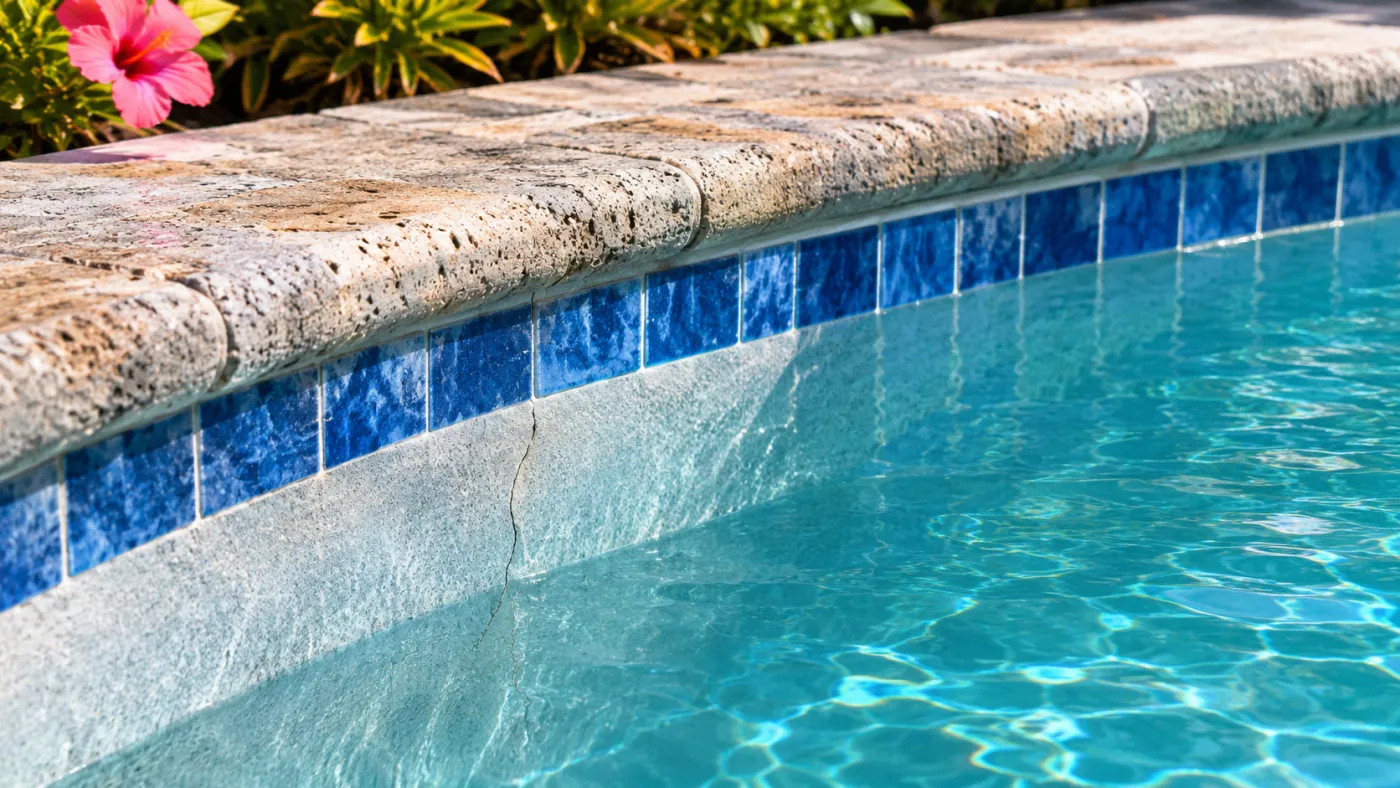
Thin crack running down the pool shell below the tile line of a travertine-edged pool

Do All Pool Cracks Leak?

No. Some cracks are purely cosmetic and affect only the surface finish.

Others may extend deeper into the structure and allow water to escape.

Common crack types include:

  • Surface plaster cracks
  • Shrinkage cracks
  • Structural shell cracks
  • Settlement-related cracks
  • Step and bench cracks
  • Cracks around fittings and penetrations

Without proper testing, it’s difficult to know whether a crack is actively leaking.

Signs a Pool Crack May Be Leaking

Look for these common symptoms:

  • Pool loses water regularly
  • Water level drops more than normal evaporation
  • Crack appears to widen over time
  • Water level stabilizes near the crack elevation
  • Staining or deterioration around the crack
  • Bucket test confirms water loss

Not all leaking cracks are visible above the waterline.

Quick Checks You Can Do Before Calling a Pro

Monitor the Crack

Take photos and compare them over time.

Look for:

  • widening
  • movement
  • discoloration
  • separation

Changes may indicate a more serious issue.

Perform the Bucket Test

Before assuming the crack is leaking, determine whether you’re losing water beyond normal evaporation.

Related: Bucket Test Guide

Watch Where the Water Level Stops

If the pool consistently stabilizes at a certain elevation, the leak may be located near that level.

Related: Pool Water Level Stops at One Level

Check for Multiple Cracks

Sometimes what appears to be one crack is part of a larger structural issue.

Inspect:

  • walls
  • floor
  • steps
  • benches
  • tile line areas
Three Leak Wizard leak detection methods side by side: a technician scanning the yard with an underground acoustic listening device, a diver squeezing red dye at a crack in the pool wall, and a technician reading a pressure gauge at the equipment pad

Why You Shouldn’t Ignore a Leaking Pool Crack

An active structural crack can lead to:

  • Continuous water loss
  • Higher water bills
  • Chemical waste
  • Soil erosion beneath the pool
  • Deck movement or settlement
  • Larger structural repairs later

The sooner a leak is confirmed, the easier it is to address.

How Pros Confirm a Suction Line Leak

To pinpoint the source, professionals may use:

  • Suction-side inspection
  • Valve and union testing
  • Line isolation testing
  • Vacuum testing
  • Pressure testing when needed
  • Equipment pad inspection

Once confirmed, we determine whether the issue is an equipment seal, valve, fitting, clogged line, or underground suction line leak.

When to Schedule Leak Detection

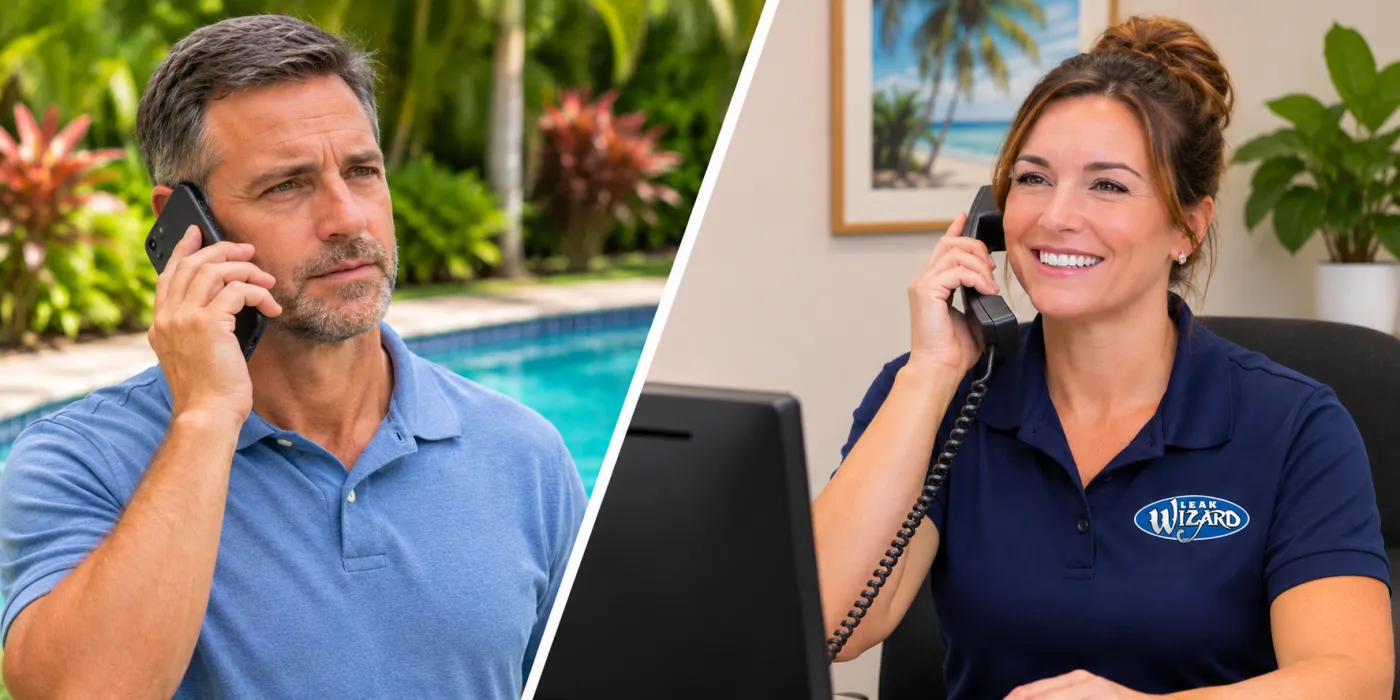
Worried pool owner calling Leak Wizard from his phone beside the pool, and a smiling Leak Wizard team member answering the call

Call to Schedule a Pool Leak Detection in Tampa, Orlando or The Villages if:

  • You notice a crack in your pool shell
  • The bucket test suggests a leak
  • Water loss continues beyond normal evaporation
  • The crack appears to be growing
  • You want to confirm whether the crack is actually leaking

At Leak Wizard, we perform pool leak detection from Tampa to Orlando to The Villages. If you have a crack in your pool shell, we’ll determine whether it’s causing water loss and give you a clear repair quote based on what we find.

Common Questions

Frequently Asked Questions

Does a Crack in My Pool Always Mean It’s Leaking?

No. Some cracks are cosmetic and do not allow water to escape. Proper testing is needed to determine whether the crack is active.

Can a Small Crack Cause a Big Leak?

Yes. Even small structural cracks can allow significant water loss over time.

How Can I Tell If a Pool Crack Is Leaking?

Signs include ongoing water loss, water level stabilization near the crack, and dye being pulled into the crack during testing.

Can a Leaking Crack Get Worse?

Yes. Water movement, ground settlement, and temperature changes can cause structural cracks to grow over time.

Can You Confirm Whether the Crack Is the Source of the Leak?

Yes. Professional leak detection testing can determine whether the crack is actively leaking or if the water loss is coming from another source.

Why Waiting Costs More

A Small Leak Rarely Stays Small.

Lost water means higher bills, damaged decking, and ground washing out from under your pool. The sooner the leak is located, the less it costs to fix.

  • Underground plumbing, equipment pad, and pool shell all checked
  • We locate the leak, then give you a quote for the repair
  • Licensed and insured Florida contractor

Talk to a Real Person

(813) 968-3232 Request Service

We reply the same business day.

(813) 968-3232