Black Friday $50 Off Pool Leak Detection

Pool Leak Guide

Pool Leak Detection Process: How Professionals Find Hidden Pool Leaks

10,000+ Leak Detections Since 2005

4.9 · 1,004 Google Reviews
  • Licensed & Insured

How Does Pool Leak Detection Work?

Three Leak Wizard leak detection methods side by side: a technician scanning the yard with an underground acoustic listening device, a diver squeezing red dye at a crack in the pool wall, and a technician reading a pressure gauge at the equipment pad

Many pool owners know their pool is losing water but have no idea where the leak is located. Because leaks can occur in plumbing lines, structural components, skimmers, lights, main drains, and other hidden areas, finding the exact source often requires professional testing.

The pool leak detection process is designed to identify the precise location of water loss so repairs can be made accurately and efficiently.

At Leak Wizard, we use a combination of proven testing methods to locate hidden pool leaks throughout Tampa and Central Florida.
Our Step-by-Step Process

Reviewing the Pool’s Symptoms

Every leak detection begins by understanding the symptoms the homeowner is experiencing.

Common concerns include:

  • Pool losing water
  • High water bills
  • Wet spots around the pool
  • Air bubbles in return jets
  • Pool losing water overnight
  • Auto-fill constantly running
  • Water level stopping at a specific point

These clues help narrow down potential leak locations before testing begins.

Visual Inspection

A visual inspection is often the first hands-on step in the leak detection process.

The technician may inspect:

  • Pool skimmers
  • Pool lights
  • Main drains
  • Tile lines
  • Expansion joints
  • Pool equipment
  • Plumbing connections
  • Visible structural cracks

Visible damage may indicate areas that require further testing.

Evaluating Water Loss

Understanding how much water the pool is losing can provide valuable information.

Factors considered may include:

  • Daily water loss
  • Seasonal weather conditions
  • Evaporation rates
  • Auto-fill activity
  • Recent changes in water usage

This helps determine whether water loss exceeds normal evaporation.

Dye Testing

Dye testing is often used to evaluate visible leak locations.

Specialized dye is introduced near suspected problem areas.

If water is escaping through a crack, fitting, or opening, the dye may be pulled toward the leak.

Dye testing is commonly used on:

  • Skimmers
  • Pool lights
  • Main drains
  • Structural cracks
  • Expansion joints

Pressure Testing

If a plumbing leak is suspected, pressure testing may be performed.

Pressure testing helps determine whether plumbing lines can maintain pressure.

Lines commonly tested include:

  • Return lines
  • Suction lines
  • Main drain lines
  • Cleaner lines

Pressure loss may indicate a hidden plumbing leak.

Plumbing Isolation Testing

In some situations, individual plumbing components must be isolated to determine which section of the system is leaking.

This process helps narrow the search area and improve diagnostic accuracy.

Electronic Leak Detection

Advanced electronic equipment may be used to help locate difficult-to-find leaks.

These tools can help identify:

  • Underground plumbing leaks
  • Structural leaks
  • Hidden water movement
  • Leak locations beneath the pool deck

Electronic testing often helps confirm leak locations before repairs begin.

Identifying the Source of the Leak

Once testing is complete, the leak source can typically be identified.

Common leak locations include:

  • Pool skimmers
  • Main drains
  • Pool lights
  • Return lines
  • Suction lines
  • Expansion joints
  • Structural cracks
  • Underground plumbing

Accurately identifying the source helps ensure repairs address the actual problem.

Repair Recommendations

After locating the leak, repair options can be discussed.

Depending on the leak type, solutions may include:

  • Structural crack repair
  • Plumbing repair
  • Expansion joint repair
  • Skimmer repair
  • Light niche repair
  • Main drain repair

Repair recommendations are based on the exact location and severity of the leak.

Why Professional Leak Detection Matters

Many pool leaks cannot be found through visual inspection alone.

Without proper testing, homeowners often:

  • Replace the wrong components
  • Spend money on unnecessary repairs
  • Continue losing water
  • Experience ongoing structural damage

Professional leak detection helps eliminate guesswork and identify the exact source of water loss.

At Leak Wizard, we use advanced testing methods to accurately locate hidden pool leaks and recommend effective repair solutions.

Schedule Professional Pool Leak Detection

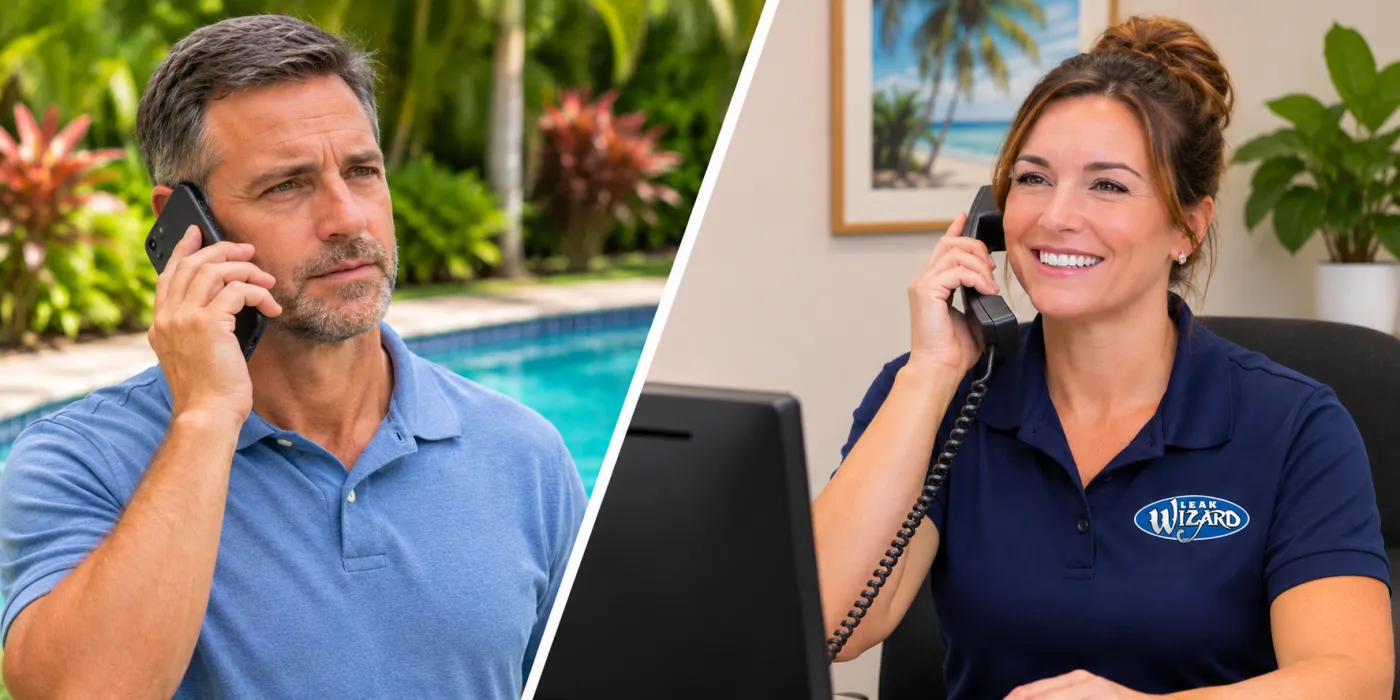
Worried pool owner calling Leak Wizard from his phone beside the pool, and a smiling Leak Wizard team member answering the call

If your pool is losing water and you are unsure of the cause, professional leak detection can help identify the source before costly damage occurs.

Leak Wizard provides professional pool leak detection and repair services throughout Tampa and surrounding Florida communities.

Call (813) 968-3232 today to schedule an inspection.

Common Questions

Frequently Asked Questions

How Long Does Pool Leak Detection Take?

The time required depends on the size of the pool, the complexity of the plumbing system, and the type of leak being investigated.

Can Pool Leak Detection Find Underground Leaks?

Yes. Pressure testing and electronic leak detection can help identify underground plumbing leaks.

Does Every Leak Require Pressure Testing?

No. Some leaks can be identified through visual inspection and dye testing, while others require additional testing methods.

What Happens After the Leak Is Found?

Once the source of the leak is identified, repair recommendations can be provided based on the type and location of the leak.

Not Sure Where the Pool Leak Is? Let’s Find Out Today.

(813) 968-3232