Black Friday $50 Off Pool Leak Detection

Pump Leaks

Pool Losing Water When the Pump Is On?

10,000+ Leak Detections Since 2005

  • Licensed & Insured
4.9 · 1,004 Google Reviews

Why a Pool Loses More Water When the Pump Is On

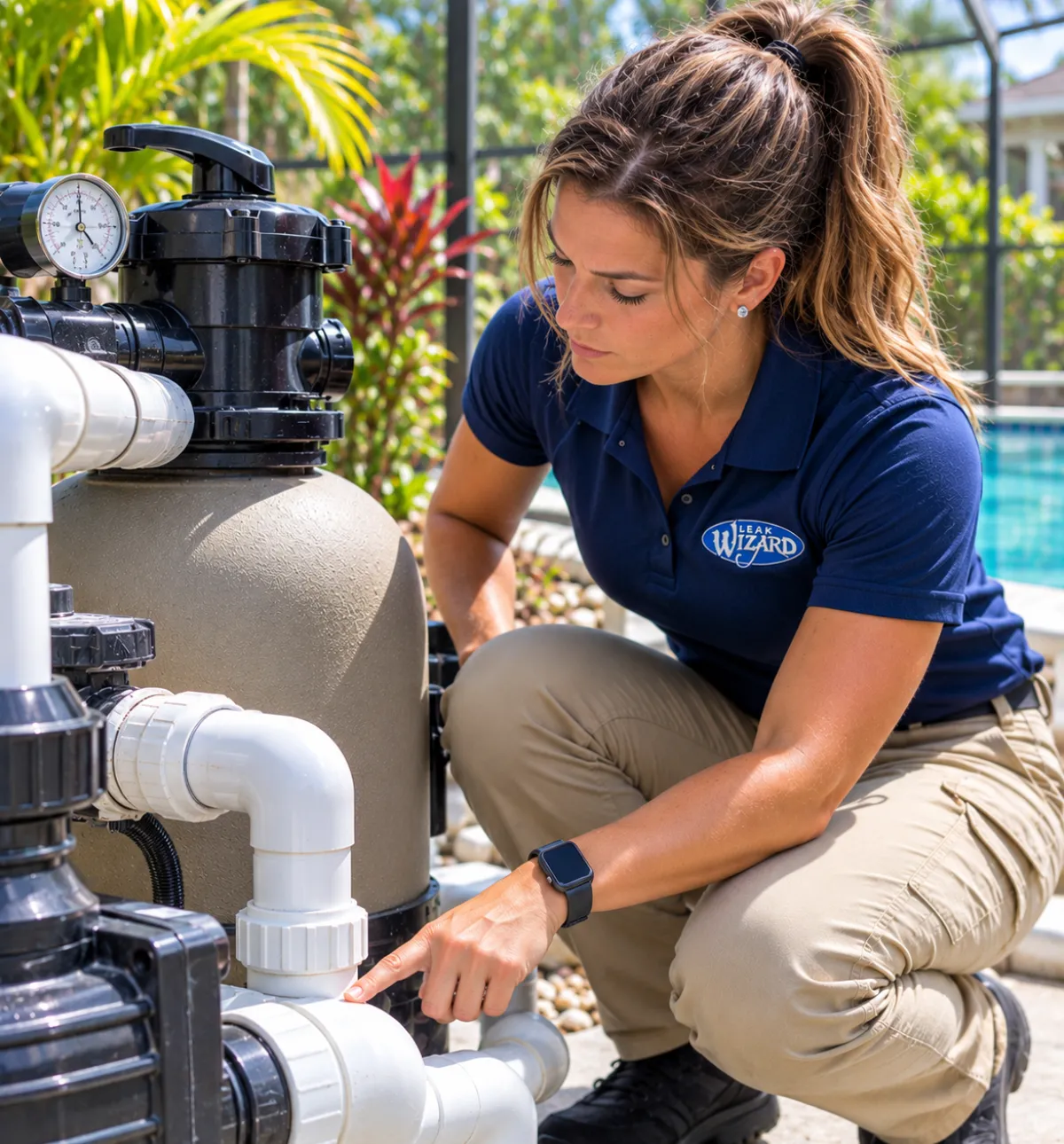
Pool equipment pad with pump, filter and plumbing

What Pump-On Water Loss Means

If your pool seems to lose more water when the pump is running, that’s a strong sign the leak may be in the plumbing system—often a pressure-side return line, suction line, equipment pad, or a component that only leaks under pressure or flow.

This is common, and it’s exactly the kind of leak professional testing can pinpoint fast.

Why It Happens

Why Water Loss Can Get Worse When the Pump Is Running

When the pump is on, your pool plumbing is under pressure (return side) and suction (suction side). If there’s a crack, loose fitting, or underground line issue, the system can leak more while running than when off.

Common “pump-on” leak causes include:

  • Underground leak in a return line (pressure-side)
  • Leak in a suction line pulling air/water issues
  • Leaking multiport valve, filter, heater, chlorinator, or unions
  • Leaking pump seal or equipment pad plumbing
  • Leak in spa/feature lines that only activate during circulation

Warning Signs

Signs Your Leak Is Related to the Pump Running

Look for these common symptoms:

  • Pool loses noticeably more water during run cycles
  • You see wet soil or puddling near the equipment pad
  • You notice air bubbles in the pump basket or returns
  • Water level drops faster overnight after a long pump cycle
  • You hear hissing/air or see drips at valves, unions, or fittings

Do It Yourself

Quick Checks You Can Do (Before Calling a Pro)

Do the Pump OFF vs Pump ON Test (Simple)

This helps confirm if the leak is plumbing-related.

Day 1 (Pump OFF):

  • Turn the pool system off for 24 hours
  • Mark the water level

Day 2 (Pump ON):

  • Run the pool on its normal schedule for 24 hours
  • Mark the water level again

If water loss is significantly worse when the pump is ON, the leak is often in the plumbing or equipment system.

→ Related: Bucket Test Guide

Check the Equipment Pad for Obvious Leaks

Look for:

  • wet ground under equipment
  • dripping unions/valves
  • water around filter, heater, chlorinator
  • constant moisture near plumbing lines

Even small drips can add up over time.

Watch for Air Bubbles (Clue for Suction-Side Issues)

If you notice bubbles in the pump basket or coming through returns, the system may be pulling air from:

  • a loose lid o-ring
  • a valve issue
  • a suction-side plumbing leak

(That’s why the “Pump Won’t Prime / Low Suction” guide is closely related.)

Skip the Guesswork

Why DIY Guessing Usually Wastes Time

Pump-on leaks are often underground or inside plumbing where you can’t see it. Replacing random parts or applying sealants usually doesn’t solve the real issue.

The fastest path is confirming:

  • is it suction-side or pressure-side?
  • which line is leaking?
  • is it equipment or underground plumbing?

How We Find It

How Pros Confirm a “Pump On” Leak

Three Leak Wizard leak detection methods side by side: a technician scanning the yard with an underground acoustic listening device, a diver squeezing red dye at a crack in the pool wall, and a technician reading a pressure gauge at the equipment pad

To pinpoint the source, pros typically use:

  • Isolation testing to narrow down which system/line is affected
  • Pressure testing of return/suction lines (as needed)
  • Equipment inspection for active leaks under operation
  • Dye testing if the leak behavior suggests a structural/fitting issue

Once confirmed, we recommend the correct repair based on what’s actually leaking—no guessing.

Next Step

When to Schedule Leak Detection

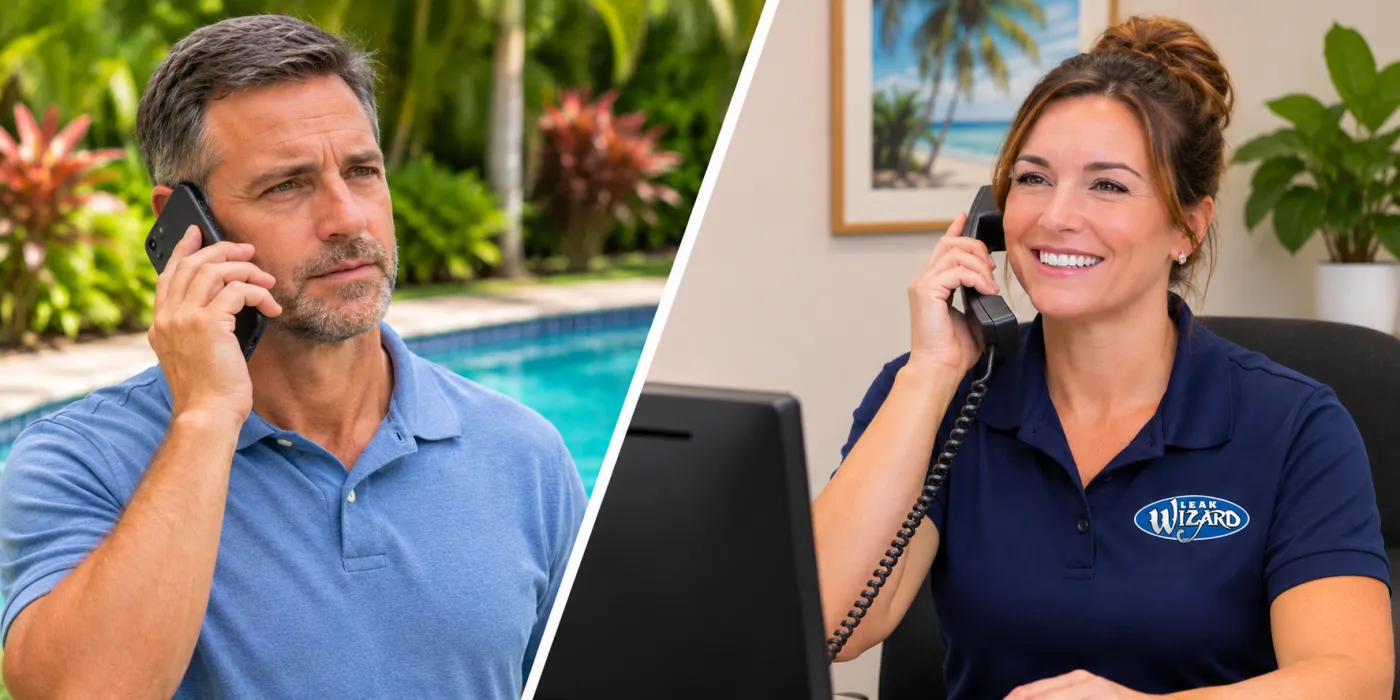
Worried pool owner calling Leak Wizard from his phone beside the pool, and a smiling Leak Wizard team member answering the call

Call to Schedule a Pool Leak Detection in Tampa, Orlando or The Villages if:

  • Your water loss is clearly worse when the pump runs
  • The pump OFF vs ON test points to plumbing/equipment
  • You see wet areas near the equipment pad
  • You want the leak pinpointed fast to prevent damage and water waste

At Leak Wizard, we perform pool leak detection from Tampa to Orlando to The Villages. If your pool is losing water when the pump is on, we’ll pinpoint it and give you a clear repair quote based on what we find.

Frequently Asked Questions

How Do I Know if the Leak Only Happens When the Pump Is On?

Do a simple pump OFF vs pump ON test over two 24-hour periods. If the pool loses significantly more water when the pump runs, it often points to plumbing or equipment.

Is This Usually a Return Line or Suction Line Leak?

It can be either. Return line leaks often worsen under pressure. Suction-side issues may show air bubbles, low suction, or priming problems.

Can Equipment Pad Leaks Cause Major Water Loss?

Yes. Even small drips at valves, unions, filters, or heaters can add up quickly—especially with long pump run times.

Do I Need to Drain the Pool for Plumbing Leak Testing?

Not usually. Many tests can be done without draining, depending on the situation and leak location.

Can You Confirm the Exact Line That’s Leaking?

Yes. Proper isolation and pressure testing can identify which line or component is failing.

Why Waiting Costs More

A Small Leak Rarely Stays Small.

Lost water means higher bills, damaged decking, and ground washing out from under your pool. The sooner the leak is located, the less it costs to fix.

  • Underground plumbing, equipment pad, and pool shell all checked
  • We locate the leak, then give you a quote for the repair
  • Licensed and insured Florida contractor

Talk to a Real Person

(813) 968-3232 Request Service

We reply the same business day.

(813) 968-3232